
Latvia Let 800 kg of Drugs Pass into Belarus
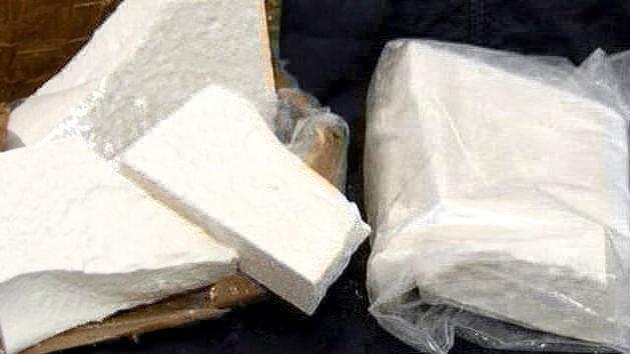
Belarusian customs authorities have dismantled an international drug trafficking channel from the European Union to the Russian Federation, intercepting more than 637 kg of the highly dangerous psychotropic substance 4-CMC, along with other narcotics.
The shipment entered Belarus from a Lithuanian warehouse via Latvia, transported on a Scania truck driven by a Belarusian citizen. According to the official documents, the truck was carrying dishwashers.
Thanks to the risk analysis system, Vitebsk customs officers at the Grigorovshchina border crossing directed the truck for an X-ray inspection. The scan revealed anomalies, and during the inspection the dishwashers were found to contain foil-wrapped packages. Inside were 540 parcels weighing 1–1.5 kg each of the powerful psychotropic 4-CMC.
The investigation then expanded beyond Belarus. In cooperation with the Russian Federal Customs Service (FCS) and the Federal Security Service (FSB), the recipients of the shipment — Ukrainian citizens — were identified and arrested.
Further searches in private properties and forested areas of the Moscow region uncovered an additional 162 kg of various narcotics and psychotropics (hashish, mephedrone, MDMA, clephedrone, and others).
In total, Belarusian and Russian authorities seized 800 kg of drugs and psychotropics, enough for 3.1 million doses. The estimated black-market value of the shipment is $75 million.
Those involved — citizens of Lithuania, Belarus, Russia, and Ukraine — have been detained. Vitebsk Customs opened a criminal case under Article 328-1, Part 2, of the Criminal Code of Belarus, while Russian authorities initiated proceedings under Article 229.1, Part 4 (a, b), of the Criminal Code of the Russian Federation. Members of the criminal group face up to 20 years in prison.
The Polish Precedent: 580 kg of Explosives
This is not the first controversial case. In April, Polish customs officers let 580 kg of explosives pass into Belarus.
Following yesterday’s meeting of the Union State leaders, where this seizure was also discussed, Polish media began offering conflicting narratives. Yet no official comments have been issued by Polish customs or border authorities. Instead, the government tasked the NASK research institute, which has no connection to customs or explosives, with commenting on the incident. NASK merely suggested it was “likely disinformation,” without certainty.
Questions remain about the effectiveness and transparency of EU border controls, where — according to Belarusian authorities — drugs, explosives, drones, and even flows of migrants manage to pass freely.
- Category: Crime
- |
- Published on: