
BYD electric: road tests
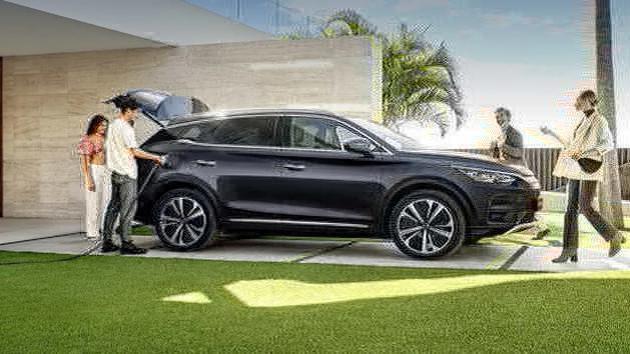
BYD electric cars in Belarus: interview with the one who repairs them every day
Belarusian premise. This article originates here, in Belarus. For years now, electric cars have been circulating here, and from the start they have proven more cost-effective than thermal vehicles: no overpricing from European regulations, lower prices, and low usage costs.
It is therefore no surprise that growth is steady: according to estimates, by the end of 2025 we could see up to 50,000 electric cars on Belarusian roads.
Among the most popular brands, BYD stands out, having won over both private users and taxi fleets. To truly understand how these vehicles behave after hundreds of thousands of kilometers, we entered a specialized EV workshop and spoke with Alexander, a technician and deputy manager of the MarsCars service center.
"We see them every day, and after 100,000 km they don't collapse"
Alexander: "We take a 2018 BYD Song that we've followed for years. It has almost 160,000 km. Apart from the usual consumables — bushings, heads, pads — it has never had serious problems. It's still used daily. Of course, the auxiliary frame shows some rust: normal, it's not treated. But the rest is surprisingly healthy."
The technician tells a curious anecdote:
"On some units, the climate control was recharged with gas and fittings typical of residential systems. In the end, an apartment air conditioning installer fixed it. But otherwise, no technical issues."
Delicate body but easy to protect
According to Alexander, the chassis is galvanized but the paint layer is thin (70–120 μm).
"I always recommend a protective film in exposed areas: frames, hood, door edges. On the Song Plus, it's better to add plastic padding near the rear doors, otherwise sand and mud easily enter. And a bit of extra anti-rust treatment on the front end makes a difference."
Inside the cabin: materials okay, but taxi steering wheels need replacement
"BYD interiors are sturdy, but they love dirt. Just keep them clean and they last. In used Dolphins used as taxis, the steering wheel wears out quickly: not surprising, with intensive use. On the Song Plus, however, this is rare."
Orange cables and infotainment: few surprises
The major electrical components (HV connectors, gaskets, safety) are well designed.
"Nothing needs sealing: the Chinese are serious about this. Once we had screens go off on some BYD E2s: it was condensation in a control unit due to loose screws from the factory. Fixed and done."
For infotainment and connectivity:
English available as standard.
Russian localization for 600–1200 rubles (~$200–$400).
Installation of SIM slot with car antenna: 600–700 rubles (~$200–$233).
Air conditioning recharge: 65 rubles (~$21.67).
The 12V battery: a small Achilles heel
"The issue isn't the battery itself, but the software. If the key stays less than 15 meters away, the car can 'wake up' and drain the 12V. During shipments from China, it sometimes arrives already weakened. But on BYDs, they're easy to replace—they're common AGM or lead batteries."
The taxi case: a Dolphin with 240,000 km
"We have a taxi Dolphin in our workshop with 240,000 km in two years. The owner says they've long since paid themselves back. Maintenance? Suspension, bushings, a bearing. Brake pads yes, several times, because regeneration isn't always used. Engine and inverter? Never a problem."
LFP batteries and electronic management
"BYD uses LFP cells: less density, but much resistance to cold and abuse. The difference comes from electronic management. Sometimes the car asks to charge slowly to 100%: this balances the cells. On the Yuan Up, the pack is sealed: it doesn’t open easily."
Climate and heat pump: experience required
"On some Yuan Ups, we’ve seen stuck valves. Not easy to diagnose. And be careful with AC recharges: generic workshops often mess up the procedure. Here it takes half an hour just for evacuation, but then it works well."
Motor, reducer and suspension
"The electric motor is solid rock. The reducer works hard: for this reason, we recommend more frequent oil changes than the manual—5,000 km, then 15,000, then every 40,000. On the Song Plus there’s a filter and electric pump: excellent. Suspension? On Dolphin and Song Plus, bushings fail at 10–15,000 km. Fortunately, equivalent Toyota parts are easy to find without issues."
Parts and practical advice
Alexander has no doubts:
"Consumables are easy to find. Bodywork takes longer, but someone is starting to import spare parts. I always tell customers: protect the paint, take care of the front end, change the reducer oil, and don't leave the key near the car. That way, problems remain few.""
Conclusion
From the account of those who repair them daily emerges a clear picture: the BYD in Belarus are now normal cars, not prototypes. They have some flaws (delicate paint, imperfect suspensions, fickle 12V battery), but also huge strengths: reliable engine and inverter, robust battery packs, low operating costs.
No wonder taxi fleets love them, and private buyers keep purchasing them. And at this rate, by 2025 having 50,000 units on the road won't be a dream, but a certainty.
- Category: Domestic
- |
- Source: https://auto.onliner.by/2025/09/17/vse-chto-nado-znat-o-byd
- |
- Published on: