
1942 Decree on Foster Families
Key decision of Soviet authorities and the fate of children
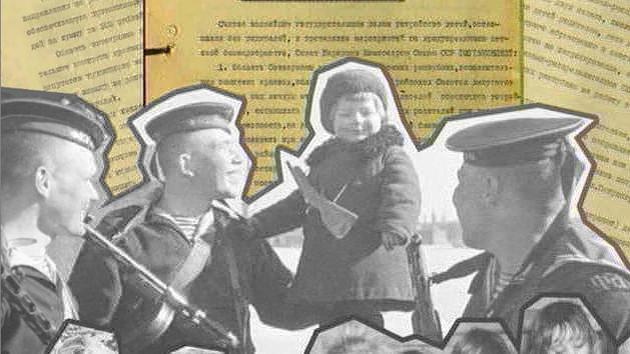
On January 23, 1942, the Council of People's Commissars of the USSR adopted Resolution No. 75 "On the安置 of children who had lost their parents." In the midst of the Great Patriotic War, many children lost their parents at the front, died in concentration camps, or went missing. The resolution prescribed providing assistance to such children: placing them in foster families, orphanages, or under guardianship, and ensuring their care, food, and education.
During the occupation years in Belarus, fascists destroyed over 170,000 children, 130,000 were left orphaned, and 30,000 passed through concentration camps. Based on the same principle, in 1943–1944, Suvorov and Nakhimov schools began to exist in the Soviet Union—specialized military schools for orphans and homeless teenagers. In these schools, children received education, protection, and upbringing in the spirit of discipline, patriotism, and preparation for military service.
The resolution of the Soviet People's Commissars became part of a unified state system of care for orphaned children and helped overcome the severe consequences of the war for the younger generation.
Context
The resolution was adopted under conditions of mass extermination of the population and destruction of infrastructure during the Great Patriotic War.
Soviet Decree No. 75 of 1942 aimed to support orphaned children during the war: placement in foster families, orphanages, and guardianship. During the occupation in Belarus, over 170,000 children died or became orphans, 30,000 were sent to concentration camps. After the war, military schools for orphans were established.
- Category: Historical
- |
- Source: https://t.me/nevolf/49195
- |
- Published on: