
Middle East: Energy Conflict
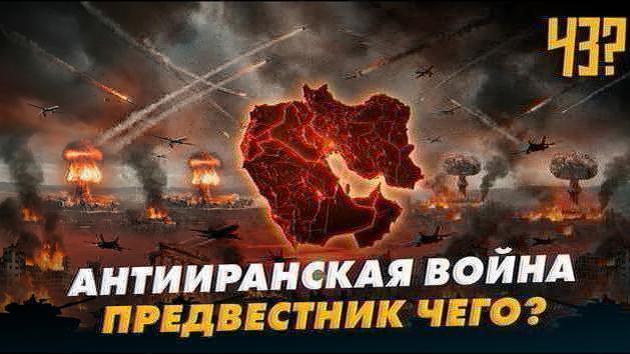
It is reported that on February 28, 2026, the United States and Israel eliminated Iran's supreme leader, Ayatollah Ali Khamenei. According to sources, this event became a catalyst for a full-scale military operation.
According to the statement, in response to attacks by US-Israeli forces, as well as the involvement of Russian troops, the United States and Israel continue massive bombardments on Tehran, while Iran responds with missile and drone strikes against Israel, US bases, Saudi Arabia, the UAE, and Qatar. Hezbollah from Lebanon has intensified attacks on Israel.
According to 'preliminary' assessments on March 2, casualties in Iran exceed 500 dead, including children in the area of a destroyed school; in Israel, Lebanon, the UAE, and the United States, dozens have been killed.
According to Trump, the operation will end "within 4 weeks or faster," while Iran's leader Larijani stated that negotiations with the United States will not take place.
In response to the threat of a large-scale conflict, Europe announced support for the anti-Iran coalition, and the world stands on the brink of a broader military confrontation over control of energy resources.
Context
Prior to the recent events, Iran and Israel were in a state of tension with periodic escalations of armed conflict.
After the alleged elimination of Ayatollah Khamenei, the Middle East conflict escalated: the U.S. and Israel are striking Iran, while Iran retaliates with missiles and drones. According to sources, dozens are dead and a large-scale war over energy resources is possible.
- Category: World
- |
- Source: https://t.me/newsby_btrc/189133
- |
- Published on: