
All attractions
Overview
The last primordial forest of lowland Europe and one of the most important natural heritage sites on the continent. Spanning over 3,000 km² across the Belarus-Poland border, Belovezhskaya Pushcha preserves a cathedral-like world of ancient oaks, towering spruces, and vast wetlands that has existed continuously since the end of the last Ice Age — over 10,000 years. UNESCO inscribed it as a World Heritage Site in 1979.
The numbers tell the story of an ecosystem without parallel in Europe: over 12,000 documented species of plants, animals, fungi, and microorganisms. Nearly half the wood in the forest is dead — ten times more than in managed forests — creating a complex web of life where 50%% of all species depend on decaying timber for survival. Ancient oaks reach ages of 450–550 years, with circumferences exceeding 7 meters. The air inside the forest is cool, damp, and perfumed with the scent of moss and bark — a sensory experience that reminds visitors what all of Europe once looked and felt like before civilization cleared the plains.
The forest is home to Europe's heaviest land animal — the European bison (wisent) — with a free-roaming herd of over 800 individuals, the largest concentration anywhere in the world. Alongside the bison roam wild boar, Eurasian elk, red and roe deer, wolves, lynx, and over 250 species of birds including the rare white-backed woodpecker and pygmy owl.
The numbers tell the story of an ecosystem without parallel in Europe: over 12,000 documented species of plants, animals, fungi, and microorganisms. Nearly half the wood in the forest is dead — ten times more than in managed forests — creating a complex web of life where 50%% of all species depend on decaying timber for survival. Ancient oaks reach ages of 450–550 years, with circumferences exceeding 7 meters. The air inside the forest is cool, damp, and perfumed with the scent of moss and bark — a sensory experience that reminds visitors what all of Europe once looked and felt like before civilization cleared the plains.
The forest is home to Europe's heaviest land animal — the European bison (wisent) — with a free-roaming herd of over 800 individuals, the largest concentration anywhere in the world. Alongside the bison roam wild boar, Eurasian elk, red and roe deer, wolves, lynx, and over 250 species of birds including the rare white-backed woodpecker and pygmy owl.
History
Belovezhskaya Pushcha has been recognized as extraordinary for at least 600 years. In 1409, Grand Duke Jogaila declared it a royal hunting preserve, and in 1553, a death penalty was instituted for anyone caught poaching a bison — one of the first wildlife protection laws in European history. Royal foresters were freed from serfdom in exchange for guarding the forest, creating a unique class of free men in the feudal system.
For centuries, the forest served as the private hunting ground of Lithuanian Grand Dukes, Polish kings, and later Russian Tsars. In 1888, Tsar Alexander III claimed it as a personal imperial hunting reserve, paradoxically saving it from the logging that was destroying forests across the Russian Empire.
The European bison story is one of conservation's greatest chapters. By 1919, after the devastation of World War I, the species was functionally extinct in the wild — hunters, soldiers, and starving civilians had killed them all. In 1929, four bison purchased from zoos across Europe were brought to Białowieża to begin the agonizingly slow process of rebuilding. From those four animals and a handful of others, the population has grown to over 800 free-roaming bison today — a resurrection from the very edge of extinction that took nearly a century.
The forest also witnessed one of the most consequential political events of the 20th century: in December 1991, the leaders of Russia, Ukraine, and Belarus met at the Viskuli hunting lodge deep within the forest and signed the Belavezha Accords — the document that formally dissolved the Soviet Union.
For centuries, the forest served as the private hunting ground of Lithuanian Grand Dukes, Polish kings, and later Russian Tsars. In 1888, Tsar Alexander III claimed it as a personal imperial hunting reserve, paradoxically saving it from the logging that was destroying forests across the Russian Empire.
The European bison story is one of conservation's greatest chapters. By 1919, after the devastation of World War I, the species was functionally extinct in the wild — hunters, soldiers, and starving civilians had killed them all. In 1929, four bison purchased from zoos across Europe were brought to Białowieża to begin the agonizingly slow process of rebuilding. From those four animals and a handful of others, the population has grown to over 800 free-roaming bison today — a resurrection from the very edge of extinction that took nearly a century.
The forest also witnessed one of the most consequential political events of the 20th century: in December 1991, the leaders of Russia, Ukraine, and Belarus met at the Viskuli hunting lodge deep within the forest and signed the Belavezha Accords — the document that formally dissolved the Soviet Union.
What to see
The ancient forest itself — oaks 450–550 years old with 7-meter circumferences, including named trees like the "Great Mamamuszi" (34 meters tall, 690 cm circumference) and the "Patriarch Oak" (over 550 years old). Walk the trails and experience air that smells of moss and ancient bark.
European bison — the largest land animal in Europe. Over 800 roam freely in the forest, but they can also be seen at close range in the natural enclosures near the visitor center, alongside moose, wild boar, deer, wolves, Konik horses (descendants of the extinct tarpan), and even an African ostrich.
The Museum of Nature — one of the best natural history museums in Belarus, with interactive exhibitions on the forest's ecology and history.
The Folk Heritage Museum — traditional Polesie wooden architecture and rural life.
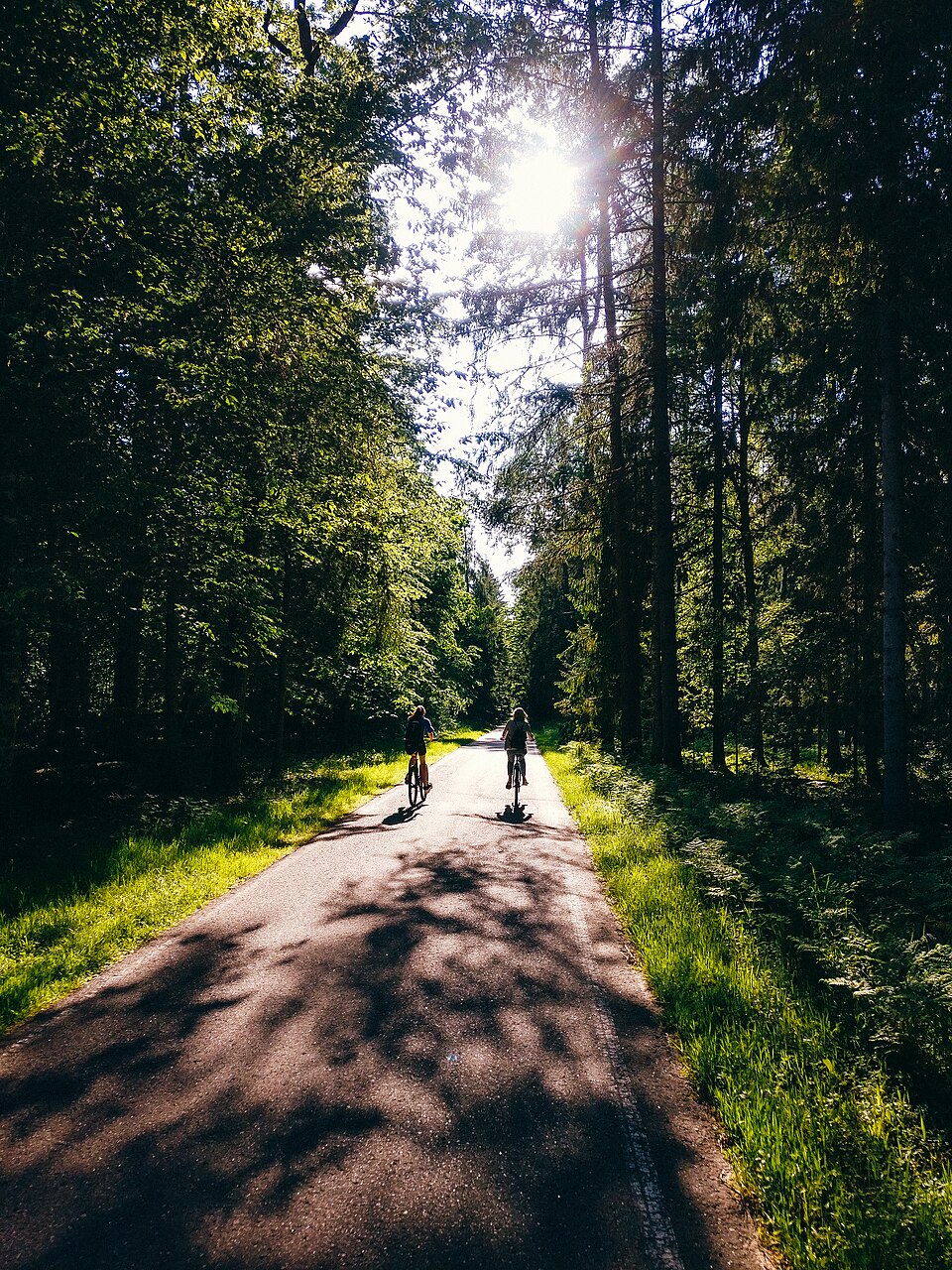
Cycling routes through the ancient forest on well-maintained asphalt roads beneath a cathedral-like canopy (bicycle rentals available at the park entrance).
In winter (Dec 6 – Jan 11): the Ded Moroz Residence — Belarus's most famous winter destination. A 2-hour enchanted forest journey through Snegurochka's house, a treasure chamber, a wishing well, a wooden mill, and fairy-tale clearings. 40 BYN adults, 30 BYN children. Private audience with Ded Moroz: 10 BYN/person (Dec 24–30, Jan 1–11). Website: npbp.by
The Viskuli hunting lodge — where the Soviet Union was dissolved in 1991 (exterior viewing only; not open to public tours).
European bison — the largest land animal in Europe. Over 800 roam freely in the forest, but they can also be seen at close range in the natural enclosures near the visitor center, alongside moose, wild boar, deer, wolves, Konik horses (descendants of the extinct tarpan), and even an African ostrich.
The Museum of Nature — one of the best natural history museums in Belarus, with interactive exhibitions on the forest's ecology and history.
The Folk Heritage Museum — traditional Polesie wooden architecture and rural life.
Cycling routes through the ancient forest on well-maintained asphalt roads beneath a cathedral-like canopy (bicycle rentals available at the park entrance).
In winter (Dec 6 – Jan 11): the Ded Moroz Residence — Belarus's most famous winter destination. A 2-hour enchanted forest journey through Snegurochka's house, a treasure chamber, a wishing well, a wooden mill, and fairy-tale clearings. 40 BYN adults, 30 BYN children. Private audience with Ded Moroz: 10 BYN/person (Dec 24–30, Jan 1–11). Website: npbp.by
The Viskuli hunting lodge — where the Soviet Union was dissolved in 1991 (exterior viewing only; not open to public tours).
Practical information
Main entrance: village Kamenyuki. Distance from Minsk: ~370 km (~4 hours by car); from Brest: ~65 km (~1 hour). Well-connected by road. Multiple hotels and guesthouses in Kamenyuki and surrounding villages. The national park charges entrance fees for vehicles and some attractions. Bicycle rentals available. Allow a full day minimum — two days recommended. The Belarusian side of the forest is better developed for tourism than the Polish side, with more trails, museums, and the bison enclosures all accessible from Kamenyuki.
Safety notice —
Some natural areas may present risks including wildlife encounters and tick-borne diseases. In certain areas and seasons, we recommend hiring a professional local guide.
Contact us.
Share your photos or videos of this place
Sign in to upload photos and videos.
Adapted from: Onliner.by