
All attractions
Overview
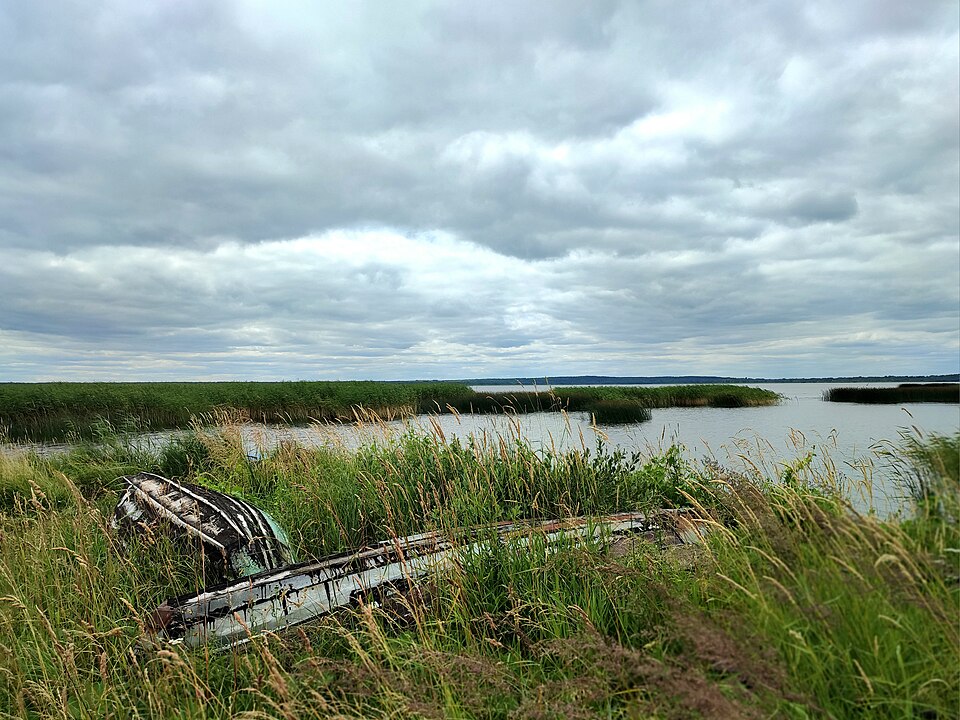
A glacial archipelago of hundreds of lakes, forested hills, and winding ridges that form one of the most beautiful natural landscapes in Belarus. The highlight is "Devil's Eye" (Chortava Voka) — an almost perfectly circular lake that seems designed by geometry rather than nature. But Braslav is far more than lakes: the surrounding countryside holds extraordinary Neo-Gothic churches with frescoes and embedded artillery shells, a rare 2-meter waterfall, a Stalinist-baroque hydroelectric station, a never-completed aristocratic palace overlooking the water, and eco-trails through juniper heaths and ancient forests. This is Belarus at its most wild and undiscovered.
History
The Braslav lake system was carved by retreating glaciers that left behind a complex mosaic of water and land. The national park protects this fragile ecosystem while developing modern tourism infrastructure — kayaking, sailing, SUP paddling, and rope courses are all available. A rare waterfall on the Vyta River adds to the area's diverse natural attractions.
What to see
Mount Mayak (Lighthouse Hill) — the primary panoramic viewpoint with observation tower (5 BYN, 9:00–21:00), views across Snudy and Strusto lakes, swings, and the start of an eco-trail through forests and juniper heaths.
The "Devil's Eye" — an almost perfectly circular lake.
The Vyata Waterfall (55°45'37"N 27°37'02"E) — a rare 2-meter cascade near the Latvian border, created by an early 20th-century dam from a defunct cardboard factory. 5 BYN admission. Best early morning before crowds.
The Okmenitza Spring (near Mayak Hill) — iron and hydrogen sulfide mineral water decorated with prayer ribbons. Local tradition considers it "life-giving."
Church in Slobodka — a white Neo-Gothic church (1901–1903) with remarkable interior frescoes: biblical scenes painted in a bright, whimsical style with flowers, birds, and snakes.
Church in Vidzy — a 60-meter red-brick Gothic cathedral (1914) with WWI artillery shell marks still visible on the facade and unexploded shells embedded in the walls as historical reminders.
Church in Ikazni — a fortress-like temple with the unique "Braslav mosaic" technique: split stone combined with red brick creating a castle-like appearance.
Church in Druya — a 17th-century early Baroque temple founded by Lithuanian Chancellor Leon Sapega, with historic bells "Sigmund" and "Casimir" from Krakow and restored frescoes.
Plater Palace in Opsa (18 km from Braslav) — a never-completed Neo-classical manor with columns, terraces overlooking the lake, cascading stairs to the water. Partially abandoned but architecturally stunning.
"Friendship" Hydroelectric Station — a 1953 power station in Stalinist baroque style with bas-reliefs, symbolizing cooperation between Belarus, Lithuania, and Latvia. Recently restored.
Eco-trails: Turbazovskoye Roga (2.5 km family loop near Drivyaty) and Slobodka Esker Ridge (5 km elevated trail between two lakes — the most secluded route, stunning in autumn).
The "Devil's Eye" — an almost perfectly circular lake.
The Vyata Waterfall (55°45'37"N 27°37'02"E) — a rare 2-meter cascade near the Latvian border, created by an early 20th-century dam from a defunct cardboard factory. 5 BYN admission. Best early morning before crowds.
The Okmenitza Spring (near Mayak Hill) — iron and hydrogen sulfide mineral water decorated with prayer ribbons. Local tradition considers it "life-giving."
Church in Slobodka — a white Neo-Gothic church (1901–1903) with remarkable interior frescoes: biblical scenes painted in a bright, whimsical style with flowers, birds, and snakes.
Church in Vidzy — a 60-meter red-brick Gothic cathedral (1914) with WWI artillery shell marks still visible on the facade and unexploded shells embedded in the walls as historical reminders.
Church in Ikazni — a fortress-like temple with the unique "Braslav mosaic" technique: split stone combined with red brick creating a castle-like appearance.
Church in Druya — a 17th-century early Baroque temple founded by Lithuanian Chancellor Leon Sapega, with historic bells "Sigmund" and "Casimir" from Krakow and restored frescoes.
Plater Palace in Opsa (18 km from Braslav) — a never-completed Neo-classical manor with columns, terraces overlooking the lake, cascading stairs to the water. Partially abandoned but architecturally stunning.
"Friendship" Hydroelectric Station — a 1953 power station in Stalinist baroque style with bas-reliefs, symbolizing cooperation between Belarus, Lithuania, and Latvia. Recently restored.
Eco-trails: Turbazovskoye Roga (2.5 km family loop near Drivyaty) and Slobodka Esker Ridge (5 km elevated trail between two lakes — the most secluded route, stunning in autumn).
Practical information
Distance from Minsk: ~3.5 hours. Two route options: via Myadel-Postavy (with Naroch access) or via Begomol-Dokshitsy-Glubokoye. All GPS coordinates marked in the article for precise navigation. Church visits: free, best in daylight. Mount Mayak tower: 5 BYN, 9:00–21:00. Vyata waterfall: 5 BYN. Bring insect repellent for eco-trails. Autumn is particularly stunning for the Slobodka Ridge trail. Book accommodation in advance during summer.
Safety notice —
Some natural areas may present risks including wildlife encounters and tick-borne diseases. In certain areas and seasons, we recommend hiring a professional local guide.
Contact us.
Share your photos or videos of this place
Sign in to upload photos and videos.
Adapted from: Onliner.by