
All attractions
Overview
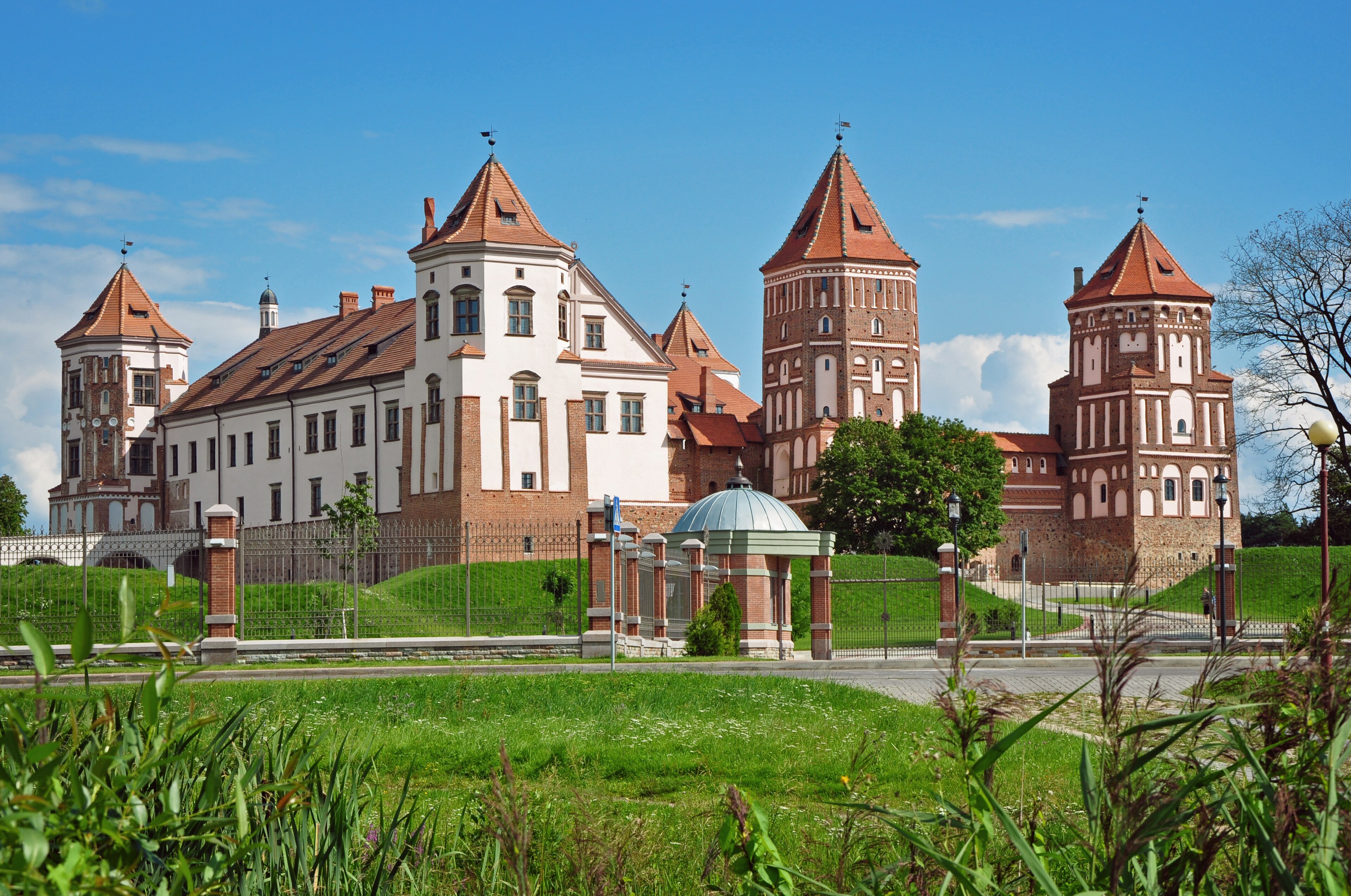
Another UNESCO World Heritage Site, Mir Castle is perhaps the most iconic image of Belarus — its powerful red-brick towers reflected in the castle pond have become a symbol of the country. Originally a military fortress with walls several meters thick, it later acquired elegant palace interiors and an English-style garden.
History
Construction began in the early 16th century by Yuri Ilinich during a period of constant military threats. The castle later passed to the legendary Radziwill family, who transformed it from a pure fortress into a country residence with reception halls, gardens, and palatial interiors.
The castle's darkest chapter came during World War II. In autumn 1941, the Nazi occupation created a ghetto housing around 3,000 Jews in the town quarter. Over 1,500 were murdered in mass shootings at the central square and in the sand quarry beneath the castle walls. In May 1942, the remaining ~850 Jews were moved into a second ghetto inside the castle itself — crammed into damp cellars behind barbed wire, surviving on 120 grams of bread per day. In August 1942, Oswald Rufeisen — a Jewish man working as a translator with forged documents — warned the inmates of the planned liquidation and smuggled weapons inside. Around 200 people escaped through breaches in the walls. The 600 who remained were murdered shortly after.
After the war, the castle became an unlikely communal apartment — by 1950, 119 people lived inside its walls, including 23 children under seven. A shoe-making cooperative called "New Life" operated in the former halls. Residents burned wooden structures for heat as the building crumbled around them. The last family left in 1962.
Restoration began in 1983 and took nearly three decades. Mir Castle was inscribed as a UNESCO World Heritage Site in 2000, and the restored complex fully opened to visitors in late 2010.
The castle's darkest chapter came during World War II. In autumn 1941, the Nazi occupation created a ghetto housing around 3,000 Jews in the town quarter. Over 1,500 were murdered in mass shootings at the central square and in the sand quarry beneath the castle walls. In May 1942, the remaining ~850 Jews were moved into a second ghetto inside the castle itself — crammed into damp cellars behind barbed wire, surviving on 120 grams of bread per day. In August 1942, Oswald Rufeisen — a Jewish man working as a translator with forged documents — warned the inmates of the planned liquidation and smuggled weapons inside. Around 200 people escaped through breaches in the walls. The 600 who remained were murdered shortly after.
After the war, the castle became an unlikely communal apartment — by 1950, 119 people lived inside its walls, including 23 children under seven. A shoe-making cooperative called "New Life" operated in the former halls. Residents burned wooden structures for heat as the building crumbled around them. The last family left in 1962.
Restoration began in 1983 and took nearly three decades. Mir Castle was inscribed as a UNESCO World Heritage Site in 2000, and the restored complex fully opened to visitors in late 2010.
What to see
The five imposing towers with Gothic and Renaissance elements. The castle museum with historical exhibitions. The surrounding pond and park. Frequent cultural events, festivals, and medieval reenactments. In winter: ice skating on the frozen castle lake with the illuminated fortress as a backdrop — smooth ice, clear light, and centuries of architecture creating an unforgettable scene.
Share your photos or videos of this place
Sign in to upload photos and videos.
Adapted from: Onliner.by